
Sector — Health Technology
Marketing Strategy for Clinical
and Practice Software
If you build practice management, clinical or scheduling software, the people making the buying decision are already stretched. GPs and practice managers spend a large share of their week on documentation and administration, and every new system is judged on one thing first: does it add to that load or lift it.
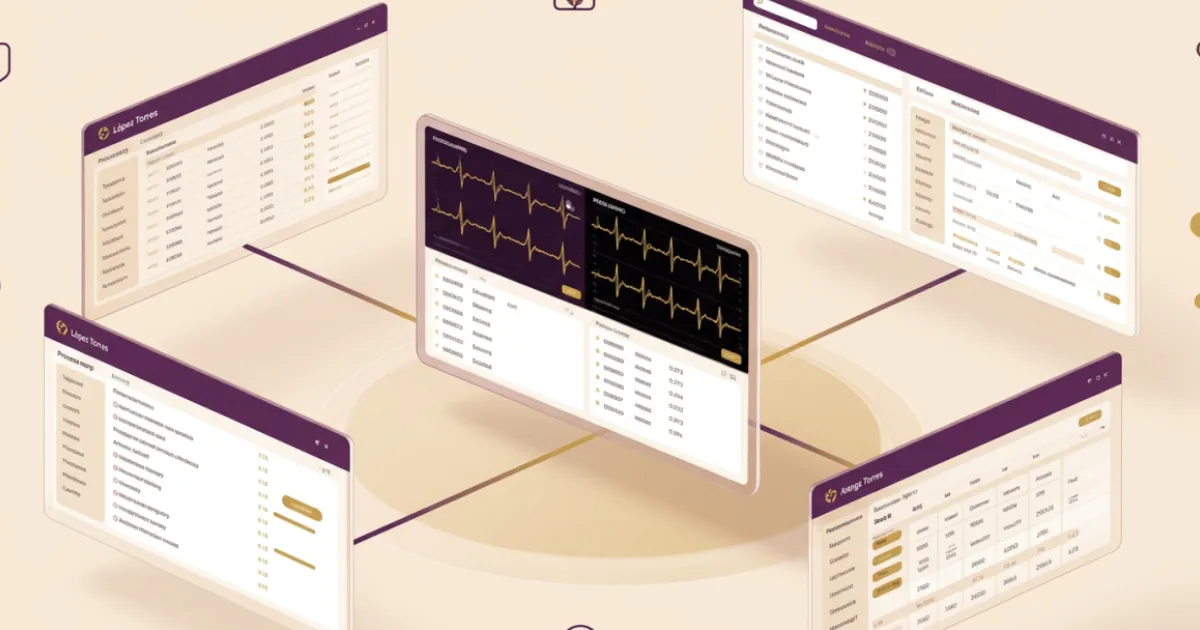
Selling into practices that are drowning in admin
Your product might be the one that genuinely lifts that load. The problem is that every competitor says the same thing. When the whole category promises to save time and reduce admin, the words stop meaning anything. Standing out is a positioning problem, not a feature problem.
Interoperability is now a commercial requirement
The rules of this market are changing in a way that directly affects how you sell.
Under the Health Legislation Amendment (Modernising My Health Record, Sharing by Default) Act 2025, more health information must be shared to My Health Record by default. From 1 July 2026, healthcare providers are required to upload pathology and diagnostic imaging reports by default, with more categories to follow. Providers have been told plainly that their software needs to be able to upload to My Health Record.
That turns interoperability from a technical nicety into a commercial requirement. Practices are now actively asking whether a system will keep them compliant and connected. The Australian Digital Health Agency is driving this through its conformance framework and the National Healthcare Interoperability Plan. If your product connects cleanly, that is a selling point you should be leading with. If it does not, that is a gap your buyers will notice.
Where the regulatory line sits for you
Most practice and clinical software is not a regulated medical device. But some of it is, and the line is easy to cross with a single sentence.
If your software moves into diagnosis, prediction, prevention, treatment or monitoring of a condition, it may meet the definition of a medical device under the Therapeutic Goods Act 1989, and how you advertise it becomes regulated by the Therapeutic Goods Administration. As AI features get added to clinical tools, more products are drifting towards that line. Your marketing needs to be written by someone who knows where it is.
What marketing needs to do here
In a category where everyone claims the same benefits, the job is to say something true and specific that your competitors cannot. That means getting genuinely clear on who your best-fit practices are, what you do better, and how to prove it without overclaiming.
It also means treating interoperability and compliance as part of the story, because that is increasingly what your buyers are deciding on.
How I can help
- Find the specific, credible position that separates you from a crowded field of look-alike products
- Turn interoperability and My Health Record readiness into a clear commercial advantage in your messaging
- Keep your claims sharp and compliant where your product sits near or across the medical device line
- Build a go-to-market approach for GP, specialist and allied health practices and the way they actually buy
- Ground your marketing in real knowledge of the primary care and allied health environment your buyers work in
Sources: Modernising My Health Record, improved access to health information (Department of Health, Disability and Ageing, health.gov.au); Better access to health information, Sharing by Default (Australian Digital Health Agency, digitalhealth.gov.au); National Healthcare Interoperability Plan 2023-2028 (Australian Digital Health Agency, digitalhealth.gov.au); Advertising software-based medical devices in Australia (Therapeutic Goods Administration, tga.gov.au)