
Insight · Aged care · Marketing strategy
Person-centred doesn't mean person acting alone

Angela Papamarkou
Founder, ARC Narrative · 5 min read
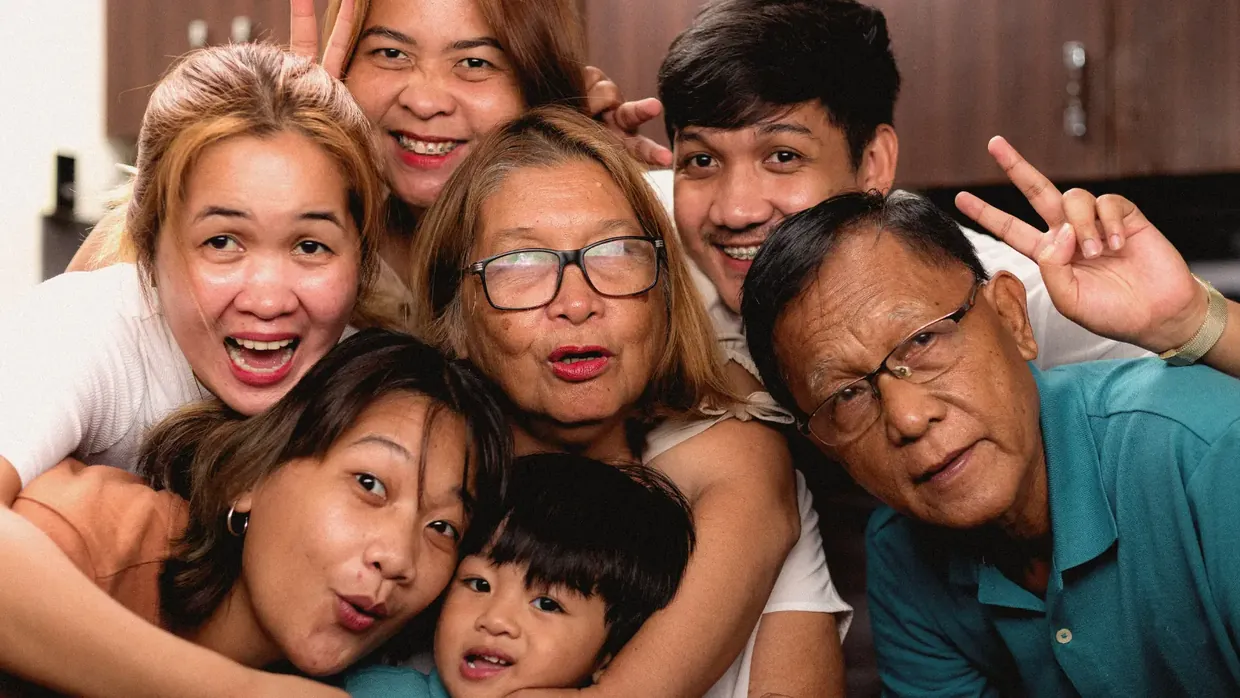
If your enquiry-to-service conversion isn't where it should be, don't start with the campaign. Start with a question most aged care marketing never asks: who's actually in the room when the decision gets made?
We build personas. Map journeys. Segment audiences. All useful. All built, more often than not, around a single older person acting alone.
But in aged care, the older person rarely decides alone.
Who's actually deciding
A daughter makes the first enquiry.
A son researches providers.
Several siblings compare the options between themselves.
The older person makes the final call, but usually after everyone close to them has had their say.
That isn't one customer acting alone. It's a decision-making unit. And it's where a lot of aged care marketing quietly falls short, because we've built our funnels, our websites and our messaging around a single confident individual, when the real decision is shared.
Your buyer persona may not be enough
This is where traditional marketing segmentation misses something important.
You may know your customer extraordinarily well: their age, circumstances, needs, concerns and motivations.
But have you mapped the decision-making unit around them?
Who researches. Who influences. Who asks the difficult questions. Who needs reassurance. Who understands the funding. Who compares providers. And ultimately, who needs to feel confident before the family moves forward.
Each of those people is looking for something different from you.
The older person might want to know: will I still have control over my life?
Their daughter might be thinking: can I trust these people with Mum?
Another family member might be asking: what will this cost, and what happens when her needs change?
One service. Three very different information needs. Yet too often we try to answer all three with one brochure, one webpage and one generic line about choice and independence.
You may know your customer. But do you understand their decision-making unit?
Culture adds another layer
There's an assumption worth challenging here too.
A lot of our language around ageing rests on a fairly individualistic idea of autonomy: advocate for yourself, make your own choices, navigate the system independently, speak up if something isn't working.
Those are important rights. But they aren't necessarily how every older person experiences independence.
More than a third of older Australians were born overseas, and around one in six speak a language other than English at home. For a meaningful share of that group, family involvement in a decision like this, whether that's residential care or Support at Home, isn't a loss of independence. It's how the important decisions in that family have always been made.
That distinction matters, because marketing isn't simply about translating an English brochure into another language. It's about checking whether the assumptions underneath the brochure, the website and the whole customer journey need translating too.
The older person should remain at the centre of the decision. But being at the centre doesn't mean being the only person involved in making it.
This is a marketing issue, not just a policy one
If your growth strategy depends on increasing enquiries, improving assessment-to-service conversion or reducing drop-off, none of this is peripheral. It's part of the commercial problem, and it belongs in your positioning and marketing strategy.
Look again at your customer journey, not only through the eyes of the older person, but through the network of people around them. Where does uncertainty show up? Who isn't getting the information they need? Where does your language quietly assume confidence, health literacy or one person deciding alone? And does your marketing make it easier for a family to work through the decision together?
Understanding your customer is important. Understanding how your customer's decision actually gets made is better. In aged care, those two things aren't always the same.
Where I'd start
If you're not sure whether your funnel has this gap, the fastest way to find out is to look at your enquiry data with fresh eyes: who's making first contact, and does your website content speak to them as clearly as it speaks to the older person? That single check tends to surface more than another round of campaign activity ever will.
If you'd like a second set of eyes on where your funnel assumes one person acting alone, that's a conversation worth having.
Older Australians, Culturally and linguistically diverse older people (AIHW, aihw.gov.au) — more than one-third of older Australians (37%) were born overseas and 18% spoke a language other than English at home, ABS Census data via AIHW analysis, accessed August 2026.
People using aged care (AIHW GEN Aged Care Data, gen-agedcaredata.gov.au) — of the 4.4 million older Australians in the 2021 ABS Census, 35% were born overseas and 16% spoke a language other than English at home.
Aged Care Act 2024 and Support at Home program information (Department of Health, Disability and Ageing, health.gov.au) — Support at Home came into effect 1 November 2025, replacing the Home Care Packages Program and Short-Term Restorative Care Programme.
If you'd like a second set of eyes on where your funnel assumes one person acting alone, that's a conversation worth having.